While it seems obvious for many people that the business process management is a must, for quite large number of other’s, it is still not sure or clear why they would engage their company on this journey.
First just look at the definition, and it is crucial to spell out two definitions:
- A business process: “A set of functions in a certain sequence that, at the end, delivers value for an internal or external customer”
- Business Process Management (BPM): “A comprehensive management approach to align business processes to corporate strategy, to analyze, optimize and implement best-in-class processes”
Part of every company objectives is to create value, obviously for external customers and when those one are happy with this value, they reward the organisation by paying more, being loyal and this one reward the shareholders.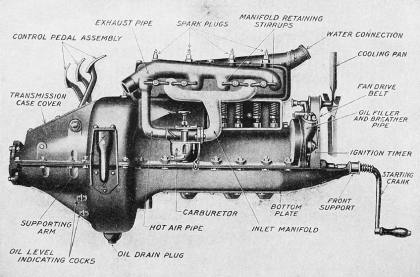
Imagine a car motor engine, every part has a specific role alone but often within a set of other parts. E.g. to manage engine cooling, to handle engine fuelling, etc…
Everybody agrees that cars evolution progressed only ‘cause of mechanic engineering drive; Every single part has been modelled, documented, tested, build (executed) and monitored along of the engines life-cycle.
You need to look at your company as an engineer would look at his engine, you can only enhance what you master as a model. If you do not know why a higher fuel entry temperature has as effect on your engine combustion chamber, then you have no clue on how you engine works. You must consider every single aggregation of “parts” in your company, how they fit together, why they produce this or that effect, what are the different components ? Which sequence will allow you to send invoice on time e.g.
If you are not convinced that your company like a car shall have a seat belt to comply with a legal regulation rules, do not go for a BPM program, no need to model and document your business processes.
We would be still using an ancestor Ford T, if no evolution or change was required or implemented. Someone in engineering and development office by his own or on demand of sales looked at how to make it faster, more robust, cheaper to build. This is the crucial role of Business Process Management, it is about mastering how the company as “engine” is working and how you can enhance it.
 Jamal Daiki