Process

Harnessing the Power of AI in Designing and Defining BPM Processes

The design and definition stages of Business Process Management (BPM) are pivotal in laying down the blueprint for efficient and effective operations. With the integration of Artificial Intelligence (AI), organizations can elevate these stages to new heights, bringing in automation, predictive analytics, and intelligent insights. Here’s a closer look at the benefits of leveraging AI during the design and definition of BPM processes.

  1. Advanced Process Discovery
    Using Automated Process Identification, AI algorithms can analyse vast amounts of data to automatically identify and document existing processes. This automated discovery eliminates the need for manual mapping, ensuring a more accurate and comprehensive understanding of the current state processes. Using also advanced Pattern Recognition AI can recognise patterns in process data, helping organisations identify common sequences, dependencies, and variations. This insight is invaluable in creating more streamlined and efficient process designs
  2. Predictive Process Analysis
    With Forecasting Performance Metrics, AI can predict the performance metrics of proposed process designs based on historical data and patterns. This predictive analysis enables organisations to anticipate potential bottlenecks, inefficiencies, and performance issues, allowing for proactive adjustments. Along with the Optimisation Recommendation, AI algorithms can suggest optimisations and improvements to process designs by analysing patterns, identifying inefficiencies, and recommending best practices. This data-driven approach ensures that process designs are continuously refined and optimized
  1. Personalised Process Design
    While using AI for the Adaptive Process Design one can tailor process designs to specific user roles, departments, or business units by analysing individual preferences, behaviours, and requirements. This adaptive approach ensures that processes are designed to meet the unique needs of different stakeholders. In addition of Context-Aware Design, AI algorithms can incorporate contextual factors, such as market conditions, customer preferences, and resource availability, into process designs. This context-aware design ensures that processes are relevant, timely, and aligned with the broader business environment.
  1. Enhanced Collaboration and Visualisation
    With AI-Powered Collaboration Tools, AI can facilitate real-time collaboration by providing intelligent suggestions, automating routine tasks, and integrating feedback directly within the design environment. This AI-powered collaboration fosters better communication, alignment, and stakeholder engagement. With Visual Analytics, AI-driven visual analytics tools can generate interactive dashboards and visualisations of process designs. These visual aids make it easier for stakeholders to understand, review, and provide feedback on process flows, enhancing transparency and clarity.

Conclusion
Artificial Intelligence offers a wealth of capabilities that can revolutionize the design and definition stages of Business Process Management. From advanced process discovery and predictive analysis to personalised design and enhanced collaboration, AI brings automation, intelligence, and innovation to BPM process design.

By embracing AI during these critical stages, organisations can create process designs that are not only efficient and effective but also adaptive, personalised, and aligned with the broader business context. As AI continues to evolve and mature, its role in shaping the future of BPM process design will undoubtedly become increasingly significant.

Process

Process first

IT needs today more than ever to connect with foundation, you remember the five why questions. Sure that root end-up in very simple process. Someone said « we do all this for that « . Connecting the dots to the origin of any digital interaction leads to a specific process, often bringing a value to the actor, sometimes quantifiable but sometimes not. When designing, coding or testing any app, the root process shall be your bible. Thinking always process is key as it would allow you to step in the user shoes, thinking always about customer purpose will guide you to the best course of actions.

Think process first

Process

The necessity of a business process management program, a motor engine analogy

While it seems obvious for many people that the business process management is a must, for quite large number of other’s, it is still not sure or clear why they would engage their company on this  journey.

First just look at the definition, and it is crucial to spell out two definitions:

  • A business process: “A set of functions in a certain sequence that, at the end, delivers value for an internal or external customer”
  • Business Process Management (BPM): “A comprehensive management approach to align business processes to corporate strategy, to analyze, optimize and implement best-in-class processes”

Part of every company objectives is to create value, obviously for external customers and when those one are happy with this value, they reward the organisation by paying more, being loyal and this one reward the shareholders.engine1

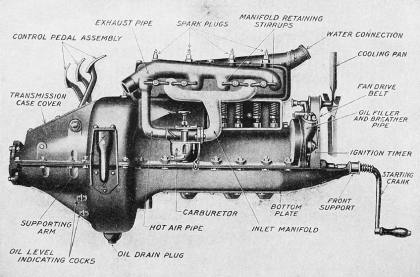
Imagine a car motor engine, every part has a specific role alone but often within a set of other parts. E.g. to manage engine cooling, to handle engine fuelling, etc…

Everybody agrees that cars evolution progressed only ‘cause of mechanic engineering drive; Every single part has been modelled, documented, tested, build (executed) and monitored along of the engines life-cycle.

You need to look at your company as an engineer would look at  his engine, you can only enhance what you master as a model. If you do not know why a higher fuel entry temperature has as effect on your engine combustion chamber, then you have no clue on how you engine works. You must consider every single aggregation of “parts” in your company, how they fit together, why they produce this or that effect, what are the different components ? Which sequence will allow you to send invoice on time e.g.

If you are not convinced that your company like a car shall have a seat belt to comply with a legal regulation rules, do not go for a BPM program, no need to model and document your business processes.

We would be still using an ancestor Ford T, if no evolution or change was required or implemented. Someone in engineering and development office by his own or on demand of sales looked at how to make it faster, more robust, cheaper to build. This is the crucial role of Business Process Management, it is about mastering how the company as “engine” is working and how you can enhance it.

Process

Introduce yourself, functions vs processes

puzzle_cook

Today most companies have a clear mission statement, an articulated vision and clear goals traceable from this vision. Often an operating plan is supporting this and everybody in the company should be able to say what is he or she is doing to support it. If asked someone would respond: “I’m working in sales, focusing in my department on emerging market, and specially on the low end-end, etc.…”. This categorisation is curious, where people would mention functions rather that processes. May be questions are biased, where during a training intro, the instructor asks the participants to present themselves, “Give your name, your department, role and what you’re doing”… what about a question like “ Give your name, the process you’re involved in, to which extend, your role and the type of process?”.

Actually, this is the result of decades of cultural heritage where processes are absent from company’s culture, language and day-to-day. This is the symptom of strong anchored functional silos where everybody recognises himself as member of a team delivering a function rather than supporting a process.

Functions versus process are may be a lost battle, as people prefer more established terminology to describe their work.

For companies having a defined, documented processes supporting the mission statement and vision, may be operated and monitored, and even more; a company rated 3 to 5 in the BPM maturity level, such company should consider transition from the functions group into processes groups. I’m not saying that there is a one-to-one mapping. This could be achieved with a co-existence of functional groups with a process layer on the top or below, where the same person presenting herself would say “ I’m Kim working in sales team supporting the order-to-cash process and especially in the contract realisation”

It is a long journey, as many companies do not have any notion of their process maps; when it is the case, staff may do not have any idea on how they are contributing to these processes.